
Resources
How to Prepare for a Colonic (and What to Do After)
Reviewed by our qualified colonic hydrotherapists , naturopaths and allied health practitioners, including ATMS, ANTA and MAA members
Published · Last updated
Most of what determines how a colonic irrigation session goes is decided before you arrive. Hydration in particular makes a bigger difference than almost anything else, and it’s the single most common reason a first session releases less than someone hoped.
None of this is complicated, and none of it requires fasting, cleanses or buying anything.
The week before
If you have time to plan, the useful thing is water. Aim for 2 to 3 litres a day in the days leading up to your appointment.
The reason is mechanical rather than mystical. Waste that has been sitting in a dehydrated colon is compacted and harder to shift, and no amount of water introduced during a session will fully rehydrate it in forty minutes. People who arrive well hydrated tend to release more comfortably and more completely.
If you’re prone to constipation, this is also the point at which gentle fibre, regular movement and consistent meal timing are worth attending to, all of it helps the session work with your bowel rather than against it.
The 24 hours before
Eat light and eat simply:
- Good: steamed or lightly cooked vegetables, soups and broths, smoothies, ripe fruit, rice, quinoa, oats
- Avoid: red meat, greasy or fried food, processed food and refined flour, alcohol, carbonated drinks
The aim is to reduce gas and residue, which makes the session more comfortable and more productive. Heavy, slow-digesting food does the opposite.
On the day
Eat a light meal 2 to 4 hours before your appointment, then nothing substantial in the final 2 hours. Keep sipping water up to about that point.
Don’t fast. Arriving on an empty stomach after a full day without food is a common mistake. It doesn’t improve the result, and it makes light-headedness more likely.
Wear loose, comfortable clothing so changing is easy. Bring a list of your medications, supplements and any relevant diagnoses or recent procedures. That’s what makes the health screening genuinely useful rather than a formality.
Allow at least 60 minutes, and an extra 10 to 15 on a first visit for the consultation.
Straight afterwards
Most people feel lighter, less bloated and noticeably clearer. Some feel a lift in energy or mood.
It’s equally normal to feel tired, a little sensitive, or even unexpectedly emotional, particularly after a first session. Neither response means anything has gone wrong.
Rehydration is the priority. A colonic flushes water and electrolytes along with waste, so drink steadily through the rest of the day. If you feel light-headed, coconut water or an electrolyte drink helps more than plain water alone.
Eating in the 24 to 48 hours after
Your digestive system is in a more receptive state, so ease back in rather than going straight to a heavy meal.
- Start with: soups, broths, steamed vegetables, ripe fruit, banana, papaya, pear, berries
- Then add: whole grains such as brown rice, quinoa or oats, and small amounts of legumes if you tolerate them
- Avoid for 24 hours: alcohol, caffeine, red meat, fried and processed food, and sugary or carbonated drinks
Smaller, more frequent meals sit better than one large one.
Probiotic foods: rebuilding gut flora
A colonic flushes some gut bacteria along with the waste. That effect is real, though the fear of “destroying” your microbiome is overstated, populations regenerate from what remains and from what arrives in your food, and there’s no evidence that occasional sessions cause lasting depletion in a healthy adult.
What you eat in the days afterwards simply gives that process a hand.
Fermented foods with live cultures are the ones to reach for:
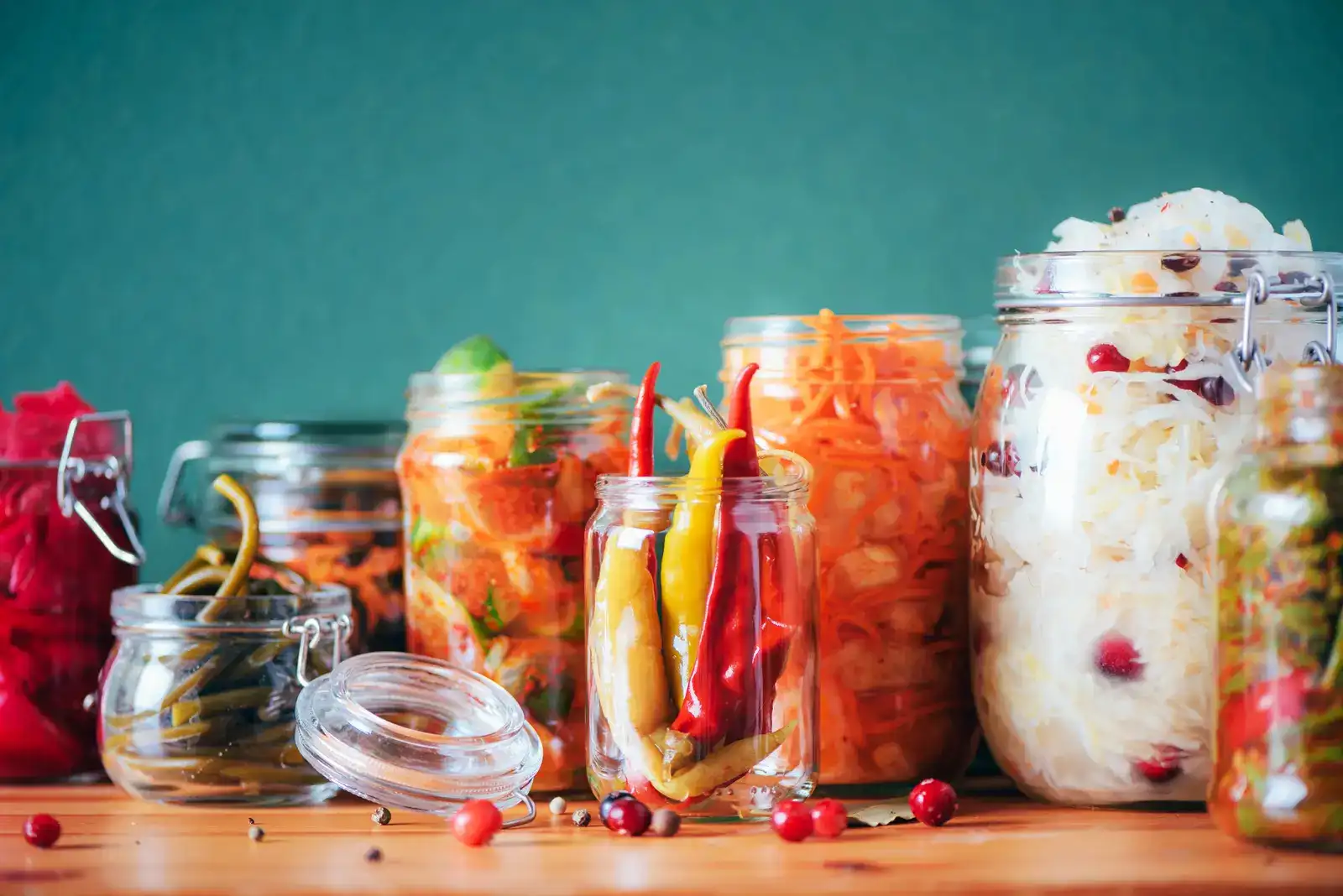
- Sauerkraut and kimchi, fermented cabbage, and among the most accessible options
- Yoghurt and kefir, unsweetened, with live or active cultures listed on the label
- Miso and tempeh, fermented soy; add miso to warm rather than boiling water, since heat kills the cultures
- Fermented vegetables, pickled carrots, beans, cucumbers and peppers, provided they’re brine-fermented
One thing worth checking: not everything that looks fermented is. Shelf-stable sauerkraut and most supermarket pickles are preserved in vinegar and pasteurised, which leaves no live cultures at all. The refrigerated section is generally where the useful versions live, and labels saying “raw”, “unpasteurised” or “live cultures” are the ones to look for.
Feed them as well as adding them. Live cultures do more when there’s something for the existing bacteria to eat, fibre-rich plants such as oats, legumes, onions, garlic, leeks, bananas and apples. Probiotic foods alone, on an otherwise low-fibre diet, achieve considerably less.
If fermented foods aren’t already part of how you eat, introduce them gradually. Going from none to large quantities overnight commonly causes gas and bloating, which rather defeats the purpose. A few tablespoons of sauerkraut or a small glass of kefir daily is a reasonable starting point.
A probiotic infusion is also available as an add-on in later sessions, introducing beneficial strains directly during treatment. It isn’t offered at a first appointment. Your practitioner will want to see how you respond to standard sessions first.
Activity
Light movement is good, a walk, gentle yoga. Avoid intense exercise, heavy lifting or anything that loads the abdomen for the rest of the day.
Most people drive themselves home and return to work without any issue. If it’s your first session, it’s worth leaving a little room in your schedule rather than going straight into something demanding.
What’s normal over the next few days
You may not have a bowel movement for a couple of days, and that’s expected. It’s the thing clients most often ring about. A colonic empties the bowel far more completely than a normal movement does, so there’s simply less to pass until you’ve eaten enough for waste to accumulate and travel the colon again. Anywhere up to about five days is within normal range.
Others experience the opposite, increased bowel activity, some urgency, changes in stool consistency, for 24 to 48 hours as things settle. Also normal.
When to call someone
Contact us, or your GP, if you have:
- No bowel movement after five days
- Severe abdominal pain
- Fever
- Persistent vomiting
- Rectal bleeding
These aren’t expected effects of a colonic and shouldn’t be waited out.
For anything you’re simply unsure about, ring us. Your practitioner can give you advice specific to your history rather than general guidance. Reception is on 03 9388 0080.
Frequently asked questions
What should I eat before a colonic?
Keep the 24 hours beforehand light and easy to digest, steamed vegetables, soups, broths, smoothies and ripe fruit. Avoid red meat, greasy or processed food, alcohol and carbonated drinks. A light meal 2 to 4 hours before your appointment is ideal, with nothing substantial in the last 2 hours.
Should I fast before a colonic?
No. Fasting isn't required and arriving having eaten nothing all day can leave you light-headed during the session. Eating light is the goal, not eating nothing.
What should I eat after a colonic?
Start gently, soups, broths, steamed vegetables, ripe fruit and whole grains such as rice, quinoa or oats. Probiotic-rich foods like unsweetened yoghurt, kefir or sauerkraut help support gut flora. Avoid alcohol, caffeine, and heavy, spicy or processed food for at least 24 hours.
Which probiotic foods are best after a colonic?
Live-culture fermented foods are the ones worth reaching for: unsweetened yoghurt, kefir, sauerkraut, kimchi, miso and tempeh. Look for refrigerated, unpasteurised versions where you can, shelf-stable sauerkraut and pickles preserved in vinegar rather than brine generally contain no live cultures. Pair them with fibre-rich plants, which feed the bacteria already there.
Do I need to take a probiotic supplement after a colonic?
Not necessarily. For most people, fermented foods plus a fibre-rich diet in the days afterwards are enough, and the microbiome re-establishes on its own. A supplement can be worth considering if you've recently had antibiotics or have an ongoing gut condition. That's a conversation to have with your practitioner rather than a default.
How much water should I drink before and after a colonic?
Aim for 2 to 3 litres a day in the days beforehand, a well-hydrated colon releases far more readily, and dehydration is the most common reason a first session produces little. Afterwards, keep drinking steadily, and add coconut water or an electrolyte drink if you feel light-headed.
Can I exercise or drink alcohol after a colonic?
Light movement such as walking or gentle yoga is fine. Avoid intense exercise, heavy lifting and anything that puts pressure on the abdomen for the rest of the day. Skip alcohol for 24 hours. It hits harder on a freshly cleared system and works against rehydration.
Ready to book your appointment?
No referral needed. Book online 24/7, or call reception.
Still weighing it up?